Skip to content
 Have you ever asked yourself whether CPR training belongs only in hospitals, or whether it belongs in more parts of daily life than most people expect? If your work, family role, or community presence places you around people who may need urgent help, American Heart Association CPR training can become one of the strongest certifications you carry.
A solid CPR course does more than help you meet a requirement. It teaches you how to recognise an emergency, start chest compressions with proper form, use an AED, and support a person until medical professionals arrive. In the US, employers across healthcare, schools, fitness, childcare, corporate settings, and public service value CPR certification because prepared people act faster and with better control.
That is why this training appeals to both licensed professionals and people who simply want to serve others well.
Why American Heart Association CPR Training Is Essential Across Different Roles
Different roles call for different kinds of readiness, yet the goal stays the same. People want a training format that teaches action, not theory alone. They want guided practice, strong instruction, and a certification that employers respect. That is why CPR training continues to reach far beyond hospitals and emergency departments.
Healthcare Professionals Who Need Certified CPR Skills Daily
Healthcare professionals work in places where fast decisions shape patient care. Nurses, medical assistants, dental teams, EMT trainees, home health aides, physician assistants, therapists, and clinic staff often need current BLS certification for employment, onboarding, and renewal cycles.
For this group, training must stay precise. Learners need a course built around emergency recognition, compressions, rescue breathing, AED use, and team-based response. In that setting, American Heart Association CPR training fits naturally because many healthcare employers already recognise the framework and expect that level of preparation.
The need also shows up in national numbers. More than 350,000 out-of-hospital cardiac arrests occur each year in the United States. That figure explains why healthcare facilities continue to place strong value on certified staff who can move from assessment to action without losing time.
Teachers, School Staff, and Childcare Providers
Teachers and childcare teams supervise children for long periods each day, and that responsibility reaches well beyond instruction. School nurses, aides, coaches, bus staff, daycare teams, after-school leaders, and administrators may face choking episodes, sudden collapse, sports injuries, or medical events linked to existing conditions.
For these professionals, CPR certification supports a safer environment for students and staff. It also helps schools create stronger response plans because trained employees know how to communicate, divide roles, and begin care while emergency services travel to the site. Parents notice that readiness.
Corporate Employees and Workplace Safety Teams
Workplaces often think of CPR as a healthcare issue, yet large offices, factories, warehouses, event spaces, front desks, and shared public sites all benefit from trained staff. Human resources teams, safety officers, supervisors, and designated emergency responders often carry responsibility for first response during a medical event.
In this setting, American Heart Association CPR training helps teams build a reliable action pattern through hands-on learning and guided repetition. That improves response speed and supports a stronger safety culture across the organisation. It also gives employers a practical way to invest in employee preparedness, especially in spaces where large groups gather each day.
Fitness Trainers, Coaches, and Sports Staff
Athletic settings move fast. Trainers, coaches, PE teachers, and sports staff guide people through exertion, heat, competition, and recovery. These professionals often become the first people on scene when an athlete collapses, loses responsiveness, or shows signs of distress.
CPR certification gives them more than a credential. It teaches order. One person calls 911. One starts compressions. One retrieves the AED. One guides the crowd. That structure protects the individual and helps the team act together.
Caregivers and Family Members Supporting High-Risk Individuals
Many emergencies happen at home, not at work. Family caregivers and personal aides often spend the most time with older adults, post-surgery patients, people with heart disease, and loved ones who live with mobility or respiratory concerns. That daily closeness places them in the best position to begin helping early.
These learners benefit from instruction that stays direct, hands-on, and easy to apply under pressure. At American Health Bio, we see many families choose CPR training because they want skill practice that feels relevant to the people they support, not a rushed class that ends before the lesson settles in.
General Public Looking to Respond During Emergencies
You do not need a license or job title to learn CPR. Parents, students, volunteers, faith-based groups, community leaders, and neighbours all benefit from this kind of training. Emergencies can happen in homes, airports, gyms, schools, parking lots, and public events. When more people know what to do, the whole community becomes stronger.
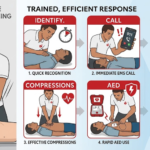
For the general public, certification also removes hesitation. It gives people a sequence they can follow. Call for help. Start compressions. Use the AED if available. Stay engaged until advanced care arrives.
How American Heart Association CPR Training Supports Faster Emergency Response
Fast response begins before an emergency ever happens. It begins in training, where learners practise how to identify cardiac arrest, check responsiveness, call EMS, begin compressions, and apply an AED without wasting movement or attention.
That sequence matters because survival depends heavily on early action. About 90% of people suffering out-of-hospital cardiac arrest die. When trained people step in early, the person in crisis receives support during the most urgent minutes. That is one reason the American Heart Association CPR training continues to stand out for professionals and community learners alike.
It builds muscle memory, teaches a repeatable response pattern, and gives learners a standard they can carry into healthcare settings, schools, workplaces, and public spaces.
What American Health Bio Offers in Its CPR Programs
We bring a strong mix of instruction, convenience, and compliance support to our CPR programs. We offer in-person Basic Life Support courses taught by AHA-certified instructors, with course content aligned with the latest AHA Guidelines for CPR and Emergency Cardiovascular Care.
Through hands-on instruction, we teach emergency recognition, chest compressions, ventilations, and AED use in a format built for action, not lecture-heavy delivery. That approach serves healthcare workers, employers, caregivers, and community members who want skill-based training they can apply right away.
Our service model adds another layer of value. We provide same-day CPR cards after successful course completion, which helps professionals who need quick documentation for hiring or renewal. We also support clients through a one-stop model that includes:
- In-person BLS CPR classes with AHA-certified instructors
- Same-day CPR card after successful completion
- Mobile appointments for individuals, teams, and workplaces
- Live Scan systems certified by the FBI and California DOJ
Outcomes You Can Expect from Certified CPR Training
People often compare CPR classes by location or price first. A better approach starts with course structure, instructor quality, skills practice, and what the learner can do after the class ends.
| Feature | What It Means for You |
| Hands-on compression practice | Builds strong muscle memory for fast action |
| AED instruction | Teaches proper use of public safety equipment |
| Emergency recognition drills | Helps learners identify signs of cardiac arrest early |
| Ventilation practice | Supports complete BLS skill development |
| Same-day CPR card | Helps with hiring, onboarding, and renewal needs |
| In-person instruction | Gives learners live correction from a qualified instructor |
A well-run class should leave you with more than a completion card. It should leave you ready to respond with skill, control, and a strong sequence of action. For employers, this supports staff preparedness. For families, it supports readiness at home. For licensed professionals, it supports compliance and continued career movement.
Conclusion
CPR training belongs to more people than many assume. Healthcare workers, teachers, childcare providers, corporate safety teams, coaches, caregivers, and community members all benefit from structured instruction that teaches how to act when every second counts.
If you want hands-on learning, AHA-aligned course content, and quick documentation after completion, american heart association CPR training remains a smart choice. Book your class with American Health Bio today, and we will help you move from interest to certification with the support your role deserves.
FAQs
Most healthcare jobs ask for BLS CPR certification since it includes adult, child, and infant CPR, AED use, and team response skills.
Yes, many providers arrange group CPR sessions for teachers, office teams, childcare staff, and school leaders, making campus-wide emergency response more organised.
A good CPR class usually covers both chest compressions and AED use, so learners know when to act and how to follow the steps.
Many employers prefer in-person classes because learners practise skills live, get corrected on technique, and complete training with direct instructor supervision.
Yes, it helps staff respond faster during emergencies, supports safety planning, and prepares supervisors or team leads to handle medical situations at work.